
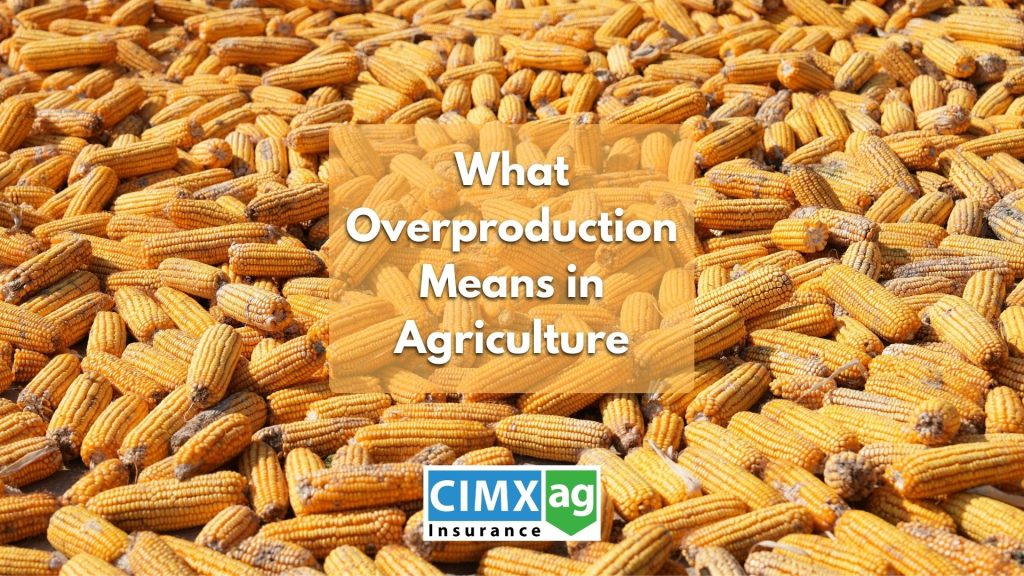
In agriculture, overproduction occurs when the total supply of a crop or commodity exceeds market demand. This can happen for several reasons, often at the same time:
- Strong prices in a previous year encourage more acres to be planted
- Favorable weather leads to higher-than-average yields
- Production increases faster than consumption or export demand
Overproduction is not the result of poor management. It is a normal market response when producers react to price signals and growing conditions align across large regions.
How overproduction affects prices and revenue
When supply outpaces demand, market prices typically face downward pressure. This can create situations where:
- Yields are strong, but prices decline
- Total production increases while revenue remains flat or decreases
- Timing, storage, and basis have a greater impact on final returns
In these years, high production alone does not guarantee strong income. The relationship between yield and price becomes especially important.
Why overproduction increases financial risk
Overproduction years often carry higher financial risk, even when crops look good in the field:
- Input costs are committed early in the season
- Prices may decline after planting or during harvest
- Revenue uncertainty increases despite favorable yields
- Cash flow planning becomes more challenging
Because price movement is outside a producer’s control, revenue risk can increase even when production risk is low.
The role of crop insurance during overproduction years
Crop insurance does not prevent market fluctuations, but it can help manage their financial impact.
For many producers, revenue-based crop insurance is designed to account for both yield and price risk. In overproduction scenarios, this can be especially important because:
- Coverage is established before final yields and prices are known
- Revenue protection can help offset income losses caused by price declines
- Insurance provides a financial backstop when market conditions change unexpectedly
Coverage decisions are made ahead of the season, making them a planning tool rather than a reactionary one.
Planning for cyclical market conditions
Overproduction is not a new issue, nor is it unique to any single crop or region. Agricultural markets move in cycles, and years of surplus are part of that pattern.
Understanding how overproduction affects prices — and how risk coverage fits into the overall financial picture — allows producers to plan more confidently, regardless of how markets move.
Taking time to review coverage options before the season begins can help ensure that both yield and revenue risks are addressed.